

OnlyFans Payment Holds and Access Timing Explained
OnlyFans charges your card in two distinct phases, and the first phase is not the subscription itself. Before any paid page unlocks, the platform places a small $0.10 verification hold on your payment method. That hold confirms the card is valid, refunds within days, and has nothing to do with the creator’s price. Understanding this sequence explains almost every “why was I charged twice” support ticket, and BestOnlyFans exists partly to document these mechanics alongside creator pricing.
This guide walks through the full money timeline: the verification hold, the authorization window, the access unlock, and the later recurring charges. It also covers stalled payments during busy periods and why your bank statement rarely matches what you see inside your OnlyFans billing history. BestOnlyFans refreshes its rankings every month.

The $0.10 Verification Hold: What Actually Happens
When you add a card to OnlyFans for the first time, the platform does not immediately charge the full subscription amount. Instead, it places a $0.10 authorization hold. This is a standard card-network practice: the processor asks your bank whether the card is real, active, and able to authorize a small transaction.
The hold is not a fee. It is a temporary reservation of ten cents that is released and refunded within a few days, depending on your bank’s posting schedule. The money never reaches OnlyFans as revenue. If you see it on your statement as pending, that is exactly what it is: a pending authorization waiting to expire.
Why does the platform use this mechanism instead of charging the full subscription right away? A tiny hold filters out invalid, expired, or stolen card numbers before the real billing attempt, which keeps declined transactions lower for everyone.
Subscribers often misread the hold because it appears alongside normal activity.
- It is a hidden fee. It is not charged permanently and does not appear in the creator’s earnings.
- It changes the subscription price. The hold is always $0.10 regardless of whether the page costs $4.99 or $49.99.
- A failed hold blocks every future attempt. A decline often clears once you use a different card or fix the bank-side restriction.
- Prepaid cards bypass it. Prepaid cards usually fail the hold more often because they lack a verified billing address.
Tip: if you see a $0.10 pending charge, do not dispute it with your bank. Disputes can freeze the card for future platform purchases and delay your actual subscription by days.
From Authorization to Access: The First-Subscription Timeline
Access is normally granted the moment the authorization succeeds, though a few visible stages sit between card entry and content unlock.

The stages below reflect what most subscribers experience on a working card and a healthy connection.
| Stage | Typical Duration | Subscriber Status | Action If Stalled |
|---|---|---|---|
| Card entry and hold placement | Seconds to a few minutes | Card pending verification | Re-enter card details and confirm billing address |
| Hold release confirmation | A few minutes to a few days | Verification in progress | Wait; do not add the card a second time |
| Full subscription authorization | Instant to several hours | Charge authorized, awaiting capture | Check bank alerts for a decline notice |
| Content access unlock | Immediate after authorization | Page visible and messages open | Log out and back in to refresh the session |
| Welcome message delivery | Minutes to a day | Inbox active | Check message requests folder |
| Ranking site price refresh | Hours to a few days | Profile listed with cached price | Treat cached prices as estimates, not invoices |
The chronological path is straightforward when nothing fails, and each step depends on the one before it:
- Card entry and placement of the $0.10 authorization hold.
- Hold release confirmation from the issuing bank.
- Full subscription authorization for the creator’s listed price.
- Content access unlock on the creator’s page.
- Welcome message delivery to your inbox.
- Price and profile update on third-party ranking sites, which can lag behind the platform.
How Recurring Billing Differs From Your Initial Signup
Month one is special because of the verification hold and because promotional pricing sometimes applies. From month two onward, billing follows a fixed anchor date set by the moment your first payment succeeded.
If the creator raises the base price, auto-renew stops rather than charging the new amount silently. Your existing access continues until the paid period you already bought runs out, giving you time to decide whether the higher price is worth continuing.

Promotional first months are the one legitimate exception to the $4.99 floor. A page can offer a $3 first month as a limited promotion, but the base price after the promotion still has to sit at $4.99 or above. Free pages are different again: those set the subscription at $0 and earn through pay-per-view messages and tips instead.
| Billing Event | First Month | Month Two Onward | Subscriber Control Level |
|---|---|---|---|
| Verification hold | $0.10 placed and refunded | Not repeated on the same card | None; automatic |
| Charge amount | Promotional or base price | Current base price | Chosen at subscription time |
| Auto-renew timing | Anchor date established | Fixed monthly anchor date | Can be turned off anytime |
| Price increase behavior | Not applicable | Auto-renew stops, access runs to period end | Full control to accept or leave |
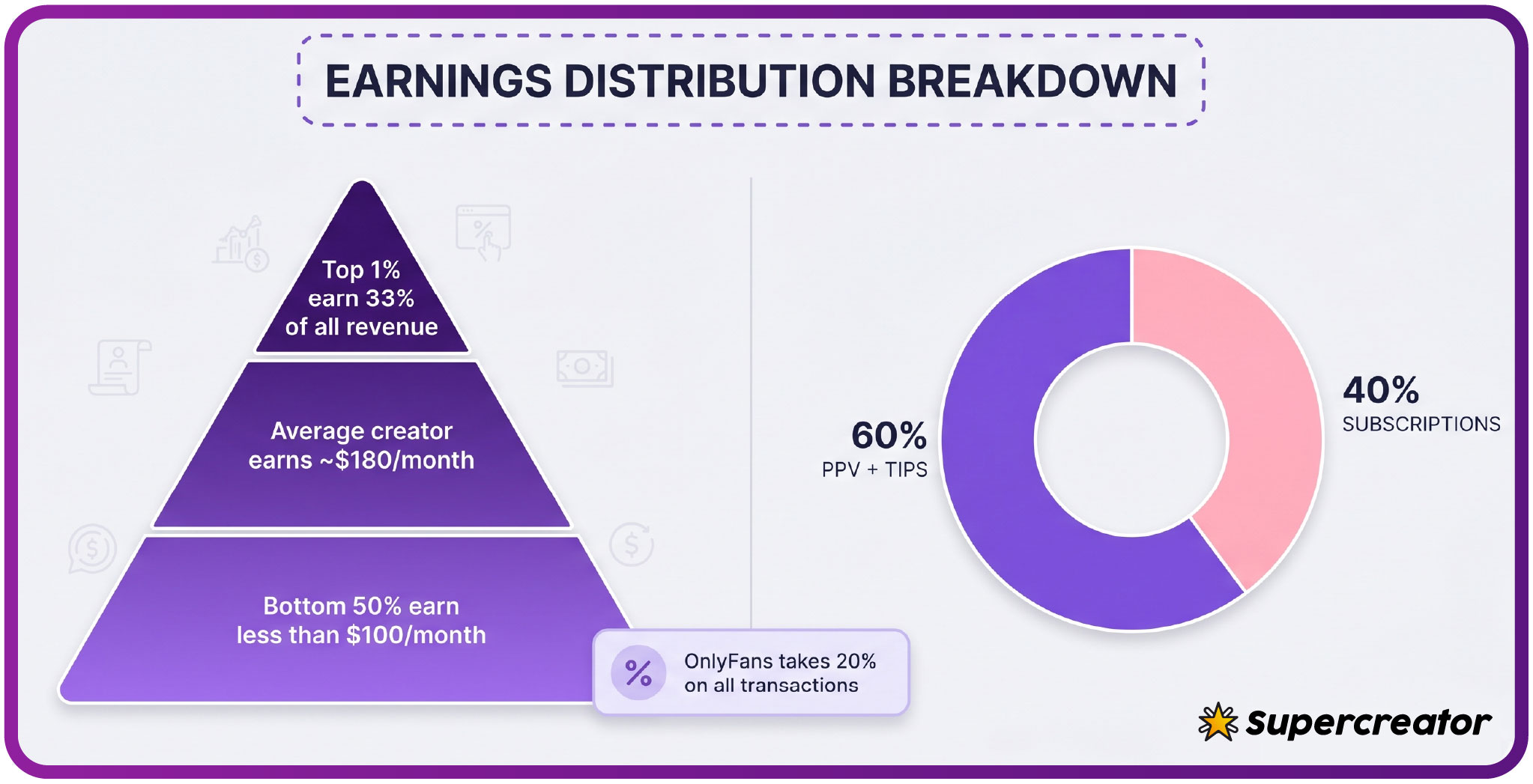
The platform takes a 20% cut on every payment, and the creator keeps the remaining 80%. That split applies to subscriptions, tips, and pay-per-view unlocks alike, which is why creators price carefully and why price changes usually mean a deliberate decision rather than a glitch.
Payment Failures During Peak Demand Periods
Card processors occasionally slow down when transaction volume spikes, and the failure patterns subscribers see are fairly consistent. None of them mean your money vanished.
Recognizing which pattern you are in saves a lot of unnecessary retrying, which itself can trigger a bank’s fraud rules.
- Instant decline with retry option. Usually a bank-side block; try a different card or call the issuer.
- Delayed decline after apparent success. The page looked unlocked briefly, then reverted; wait for the hold to clear.
- Partial authorization requiring completion. The bank approved part of the amount; the remainder needs manual confirmation.
- Ghost success with no access grant. Money moved but the page stayed locked; a session refresh usually fixes it.
- Double-hold artifacts on some card types. Two pending authorizations appear, but only one ever settles.

During these windows, your access status is best read from inside your OnlyFans account rather than from your bank app. The account view reflects the platform’s authoritative record; the bank view reflects an authorization that may still be in flight and may never settle.
When Your Bank Shows a Different Charge Timeline
None indicate an error on their own, but each one confuses subscribers enough to generate support tickets.
- Pending hold differing from the final amount. The $0.10 reservation and the real charge are separate entries; the small one expires.
- Multiple small charges consolidating later. Several authorizations can post as one settled charge after processing.
- Descriptor names not matching “OnlyFans”. Payment processors often use an abbreviated billing descriptor instead.
- Timezone-based date mismatches on renewals. A renewal at 11 PM your time can post on the next calendar day at the processor.
To reconcile records reliably, compare the settled amount against your OnlyFans billing history, not against your pending transactions. Pending items are provisional.
Reading BestOnlyFans Price Data Against Billing Realities
Ranking sites publish creator-set prices, and those numbers answer a different question than your bank statement does. A listing shows the base subscription price at the time of the last crawl. What you actually pay includes hold timing, currency conversion where applicable, and any promotional rate that has since expired.
That distinction matters when you are comparing pages or checking whether a charge looks right. If a listing says $9.99 and your statement shows a slightly different figure, the gap is usually conversion or a cached price rather than an overcharge. Subscribers who want the fullest picture of platform pricing trends can cross-check best onlyfans stats alongside their own billing history before assuming something went wrong.

If your card is issued in a currency other than the one the platform bills in, your bank applies its own exchange rate at settlement time, and that rate can shift between authorization and capture.
Protecting Your Budget Around Payment Uncertainty
Holds and pending authorizations create a window where your available balance looks smaller than your actual spending. A few habits keep that window from causing accidental double charges or overdrafts.
- Track hold dates in a calendar so you know when ten cents and the real charge should clear.
- Wait for the hold to resolve before adding another subscription on the same card.
- Set card alerts at a low threshold so every authorization pings you immediately.
- Document the billing descriptor your bank uses so reconciliation takes seconds, not calls.
- Review price history on ranking sites before reacting to a charge that looks unfamiliar.
Pay-per-view messages unlock at up to $50, paid chat commonly runs $3 to $5 per message, and tips can reach $100. Those amounts authorize immediately and settle like any other purchase, so budget for them separately from subscription renewals.
Warning: repeatedly retrying a declined payment can trip your bank’s fraud system and freeze the card for all online purchases, not just this platform.
If you decide a subscription is no longer worth the price, cancel through the subscription settings before the next anchor date. Access continues until the current paid period ends, and no further charges are attempted. Turning off auto-renew early is always safer than canceling on the renewal day itself.
FAQ
Why was I charged $0.10 before my full OnlyFans subscription fee?
That is the card verification hold. The platform places a temporary ten-cent authorization to confirm your card is valid and able to process payments. It is refunded within a few days and is never kept as revenue.
How long should I wait if my payment shows pending but I have no access?
Give it a few hours for the authorization to capture, then refresh your session by logging out and back in. If the pending item is more than a couple of days old, check your account’s billing history rather than your bank app.
Will a failed card verification hold prevent me from trying a different payment method?
You can add another card and complete verification normally, though it helps to confirm your billing address matches the card on file.
Why does my bank statement date differ from my OnlyFans renewal date?
Your renewal anchor date is set when the first payment succeeds, while your bank posts settled charges according to its own schedule and timezone.